
Andrew Stein: Lion Whisperer
By Melissa Karen Sances • Photos by Nikki Gardner Studio & Courtesy of Andrew Stein
Published In Northampton Living | August 2026
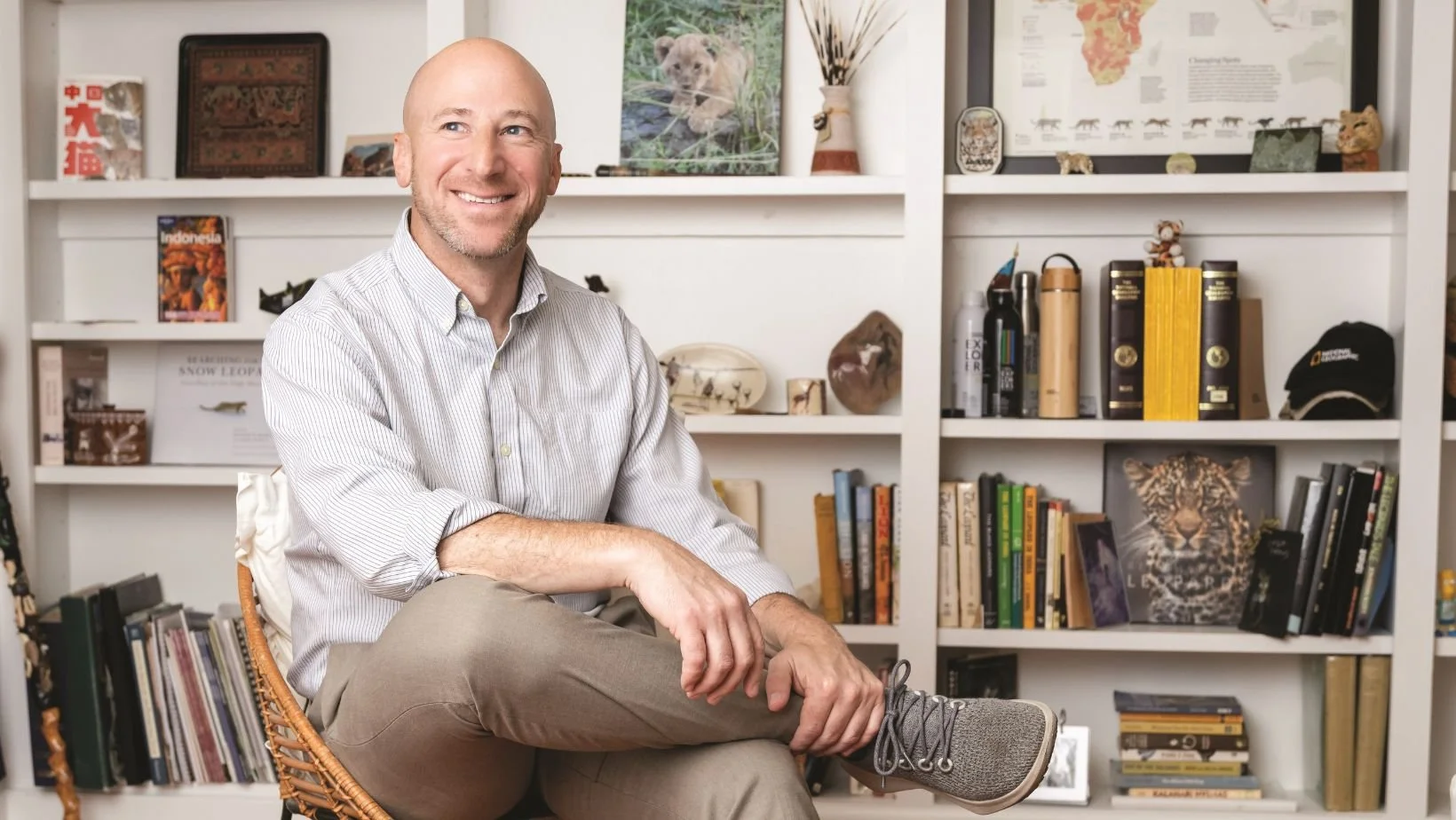
Almost 30 years ago, Andrew Stein had the experience of a lifetime.
The founder of CLAWS Conservancy, which stands for Communities Living Among Wildlife Sustainably, was a student at Connecticut College, where he majored in zoology and enrolled in a study abroad program that would bring him to Africa – a place he’d only seen on television.
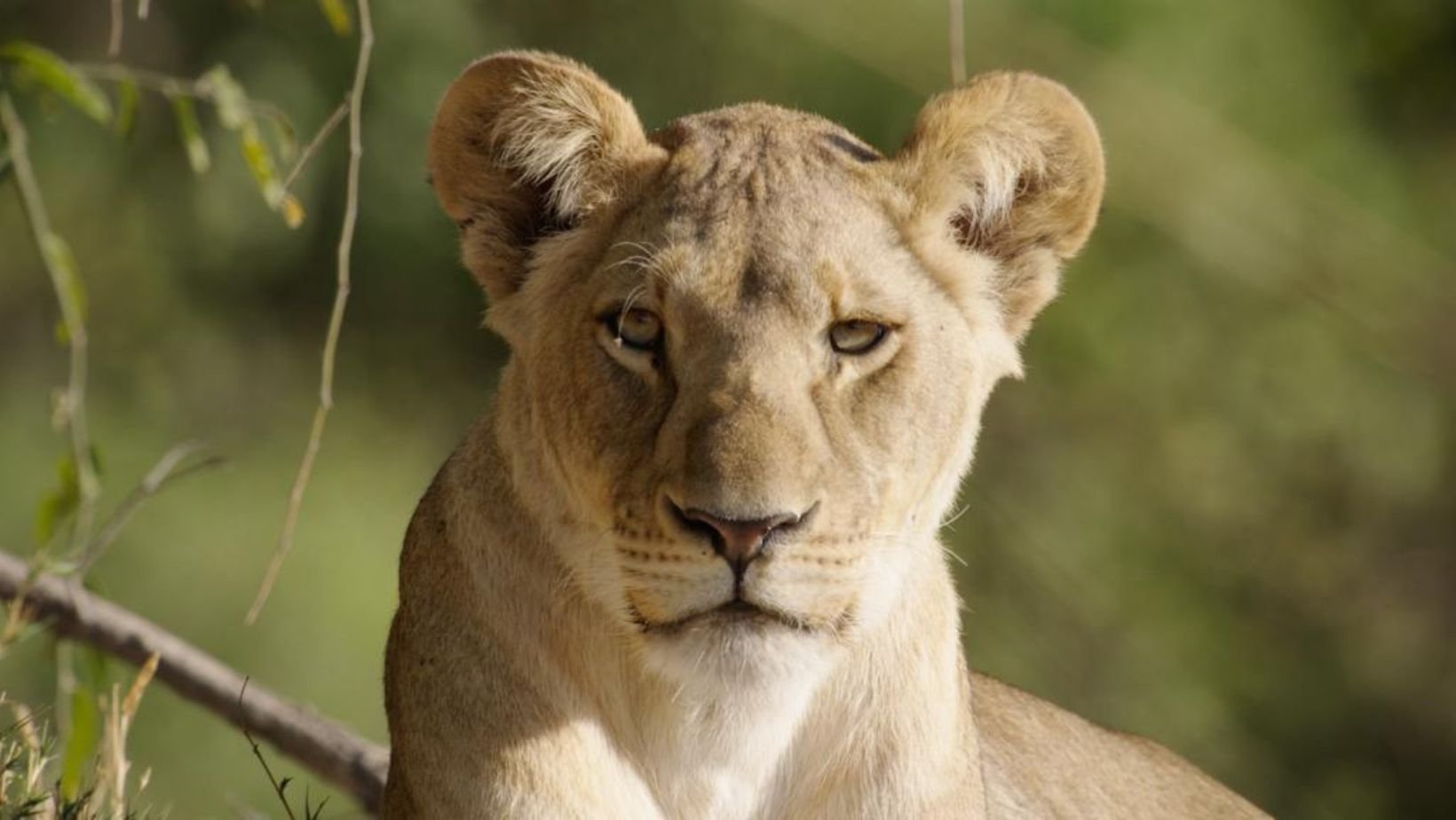
While growing up in Worcester, Stein was “obsessed” with wildlife documentaries, and though he’d worked at a local science center and a zoo, he longed to study big cats in their natural habitat. (His favorite stuffed animal was the Pink Panther.)
So he packed his journal and headed across the world.
“We got to Nairobi [Kenya] at night,” he remembered. “We [students] boarded these vans, driving farther and farther out to the ranch where we were staying. [The program leaders] showed us to our huts and said, ‘See you in the morning.’
“You start hearing all these different sounds at night. As the sun rises and as the darkness disappears, there was this dense fog around the whole place. Over the course of the morning the mist would burn off and it would slowly reveal itself. You start to see monkeys in the trees, then a giraffe 100 yards away.
“On my second day, there was a cheetah that had been captured and they were going to release it where we were staying. I could see inside the cage, then we observed Kenya Wildlife Service lift the door, and we spent several days tracking that cheetah. That was like, ‘Oh my God, I’m doing actual research, this is an endangered animal, how is this possible?’ It was the ultimate adventure.”
His awakening was followed by a reality check. While speaking with people in tribal communities, he realized that the animals who lived alongside them were their enemies.
“Elephants were raiding crop fields, lions killed their cattle, and people were legitimately fearful,” he said.
He had to help. He had to come back.

“It brought into clear focus my purpose on Earth, in life,” said Stein. “Conservation is really the nexus of understanding wildlife and working with communities to ensure their livelihoods are safe.”
All of a sudden, he understood who he was – but no one else got it.
“I think people thought, ‘That was nice for you, what do you want for dinner?’ I don’t think they understood the seed that was germinating in my being and what it was going to do.”
His parents advised him to “find the people doing the ultimate job you would want, then see what credentials they have, and make sure you get those.”
He had always taken work seriously. When he was a teenager, his father suggested he volunteer at the local zoo, and Stein showed up in a suit and tie. “I could tell they were trying not to laugh – every other kid wore a tee-shirt, and here I am with a clip-on tie,” he remembered with a chuckle.
Now, with the same zeal, Stein went to his advisor. “I want to study big cats in Africa,” Stein told him.
“You’re not going to get a job. Why don’t you study birds in New England?” his advisor replied.
Stein thought, “I’m 22 years old and I haven’t even tried yet! That doesn’t make any sense.”
After contacting 15 scientists and getting no response, Stein, who knew he’d have to go to graduate school and get his Ph.D to do the work he wanted, applied blindly to UMass Amherst and was offered a full master’s to study sturgeon.
“To be completely honest, I wasn’t sure what a sturgeon was,” he remembered. His new advisor said that if he did all the work required of him to study fish behavior, he could use the library for whatever he wanted.
Now it was time to find a professor who worked with wild animals.
In his first week of graduate school, he came across Todd Fuller, an expert in wolves, jaguars and snow leopards, among other things.
“I’m really excited about big cats in Africa,” Stein told him, and Fuller met his enthusiasm with gravitas. For months, he would give Stein a scientific paper to read, and ask him to come back and discuss it. Eventually he asked him what cats he wanted to work with, and Stein had decided on leopards. Next Fuller told him to come up with project ideas.
Long story short, he discovered “that no one was studying the most widely distributed cat on the planet. And I thought, ‘This is my chance.’”
For four months, he studied scent marking in leopards as a deterrent for conflict in livestock areas. He knew that leopards were solitary and territorial, but that, somehow, other animals knew to stay away. “It was a system of mutual avoidance through communicating through scent marks,” he explained.
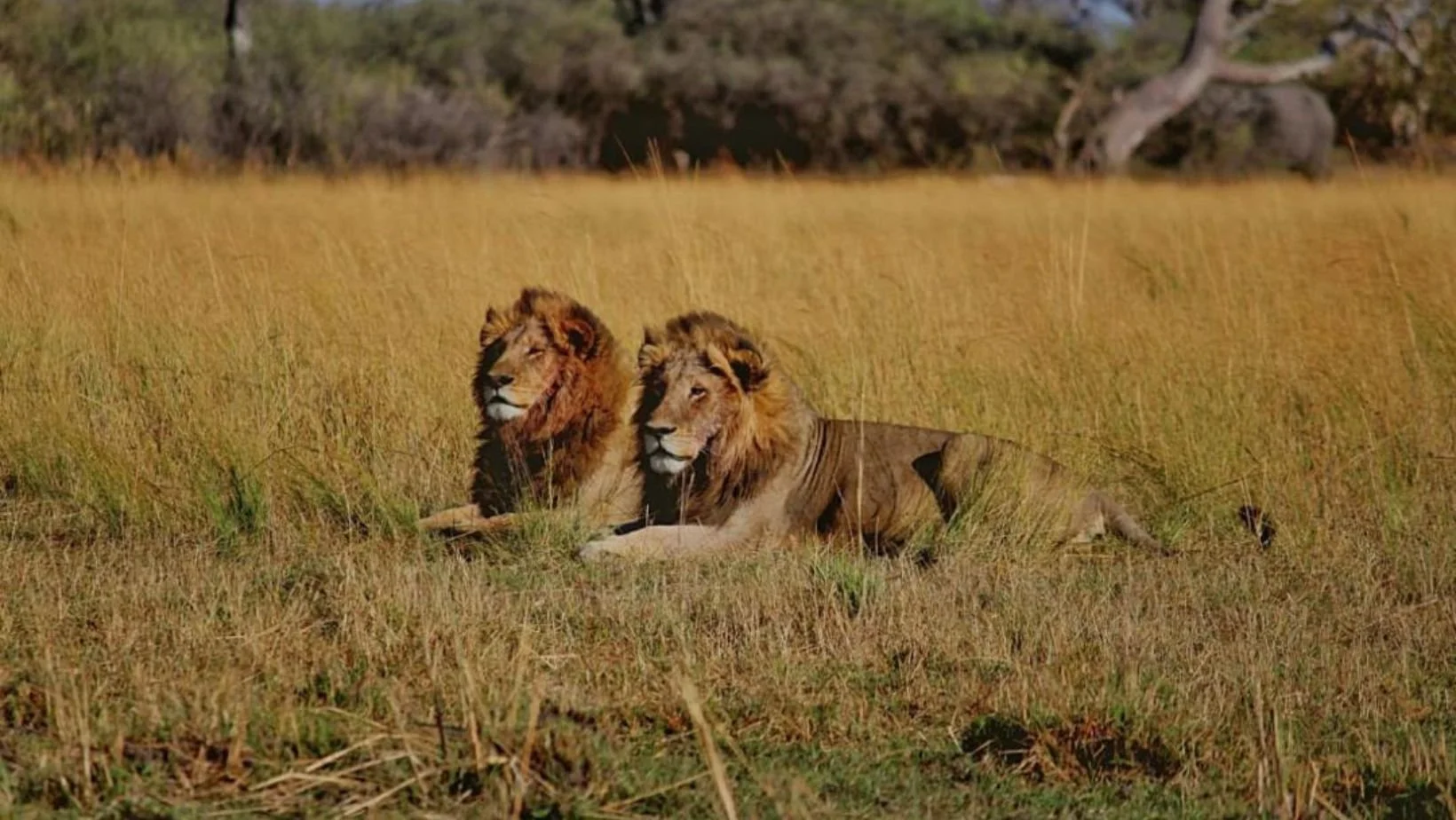
Next he was off to Kenya to study wild dogs, and was awarded a Fulbright scholarship through UMass to work on his Ph.D. From there, he moved to Namibia to study leopards.
In 2010, Stein completed his post-doc while running a remote research station in Botswana, studying lions, cheetahs, hyenas and wild dogs. By now he was in his mid-30s. “It was the pinnacle of my life to that point,” he said. “I lived in a tent the whole time, and I would be surrounded by elephants. I’d walk to the shower and a hyena would come out. I’d be eating dinner and a leopard would be drinking from the birdbath. It was wild.”
But his family’s big life events were happening without him, and for the first time, he wanted to go home.
Back in western Mass, where he’s been based since, Stein became a professor at Landmark College in Vermont and got his own graduate students.
So he was ready when a colleague wrote to tell him that villagers in Botswana were poisoning lions in retaliation for killing their livestock. It was another way for him to fulfill his purpose while stepping back and allowing others to share the work.
In 2014 Stein founded CLAWS to reduce human-wildlife conflict, providing compassionate alternatives to poisoning lions. CLAWS now has 50 employees, of whom 94% are African, and whose leadership is more than 50% women.
Over the years, he and his coworkers put satellite tracking collars on lions, and began holding naming ceremonies so that villagers could develop a relationship with each one.
“They were seeing all lions as the same,” Stein explained, “and I wanted to show them that all lions have a personality.”
They soon developed an alert system, which could deliver text messages to villagers with the name of the lion and how far away it was, as well as a communal herding program that could keep their cattle safe. Over the last six years, 390 people have signed up and CLAWS has sent 70,000 alerts about 98 lions.
In addition, CLAWS is the first organization in Africa to sell certified Wildlife Friendly Beef that incentivizes rural farmers to conserve lions for a better price.
Back in North America, Stein has always appreciated the wildlife in Northampton, as well as the liberal culture that champions equal rights. He plays basketball at the YMCA, has taken Argentine tango lessons for 18 years, and recently embarked upon salsa.
“Even when I was traveling, I knew I was going to come back to western Mass,” he said.
To learn more, visit clawsconservancy.org. Stein is looking for volunteers, board members and speaking opportunities.
Other Articles from this Issue….